
Free nephrology ABIM review sample
Make renal review easier to revisit by separating the presenting problem, the evidence, and the decision.
This free excerpt from For The Boards lets you inspect the layout before buying the printed book. The sample is an excerpt, not the full chapter or a complete board-preparation course.
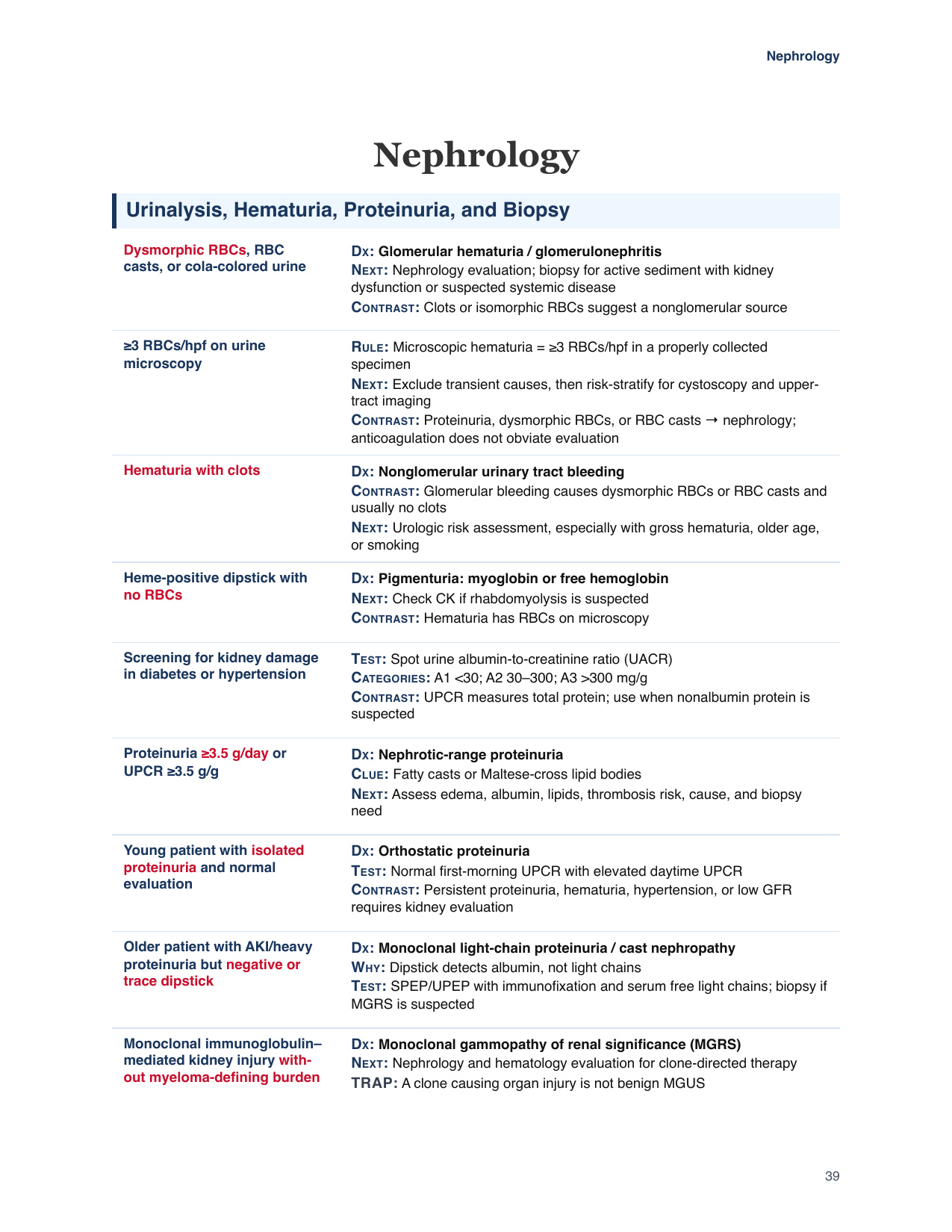
Renal questions often ask you to combine several kinds of information. A useful note keeps your reasoning visible: which result mattered, how it fit the rest of the vignette, and why it changed your answer. Copying only the final diagnosis can hide the step you need to practice.
Build a note around the evidence
- Start with the problem. Write a short description of what the question asks you to explain or manage.
- Select the useful data. Identify the result or trend that changed your reasoning.
- Explain the contrast. What made your competing answer less appropriate in this case?
- Save the next-step question. Write a prompt that tests the decision, not simply recognition of the diagnosis.
Keep calculations interpretable
If a question requires a calculation, record what the result means in that context. Check units, inputs, assumptions, and whether the source describes situations where the calculation is less useful. An isolated formula is harder to use correctly than a formula linked to its purpose.
When reviewing urine findings or changes in kidney function, avoid making a single clue stand in for the whole clinical picture. Use the source explanation to identify the combination of findings the question relies on, and keep that combination in your note.
Try the format with one question you missed
Open the sample and look for a related topic. Add a short prompt beside it: the clue you overlooked, the alternative you confused it with, or the decision you want to practice. Leave the full explanation in your source and add a reference so you can return to it.
The book uses compact labels such as Dx, Next, Contrast, and Trap. Use the sample to decide whether that layout helps you organize your own notes. For a step-by-step method, see how to review missed questions.
These study prompts describe a review method, not clinical care instructions. Check diagnostic and treatment details against current references and your educational supervision.
Explore the other samples: Cardiology · Pulmonology. The printed book is $60 with U.S. shipping included.