
Free pulmonology ABIM review sample
Organize pulmonary review around the pattern, the setting, and the finding that separates similar presentations.
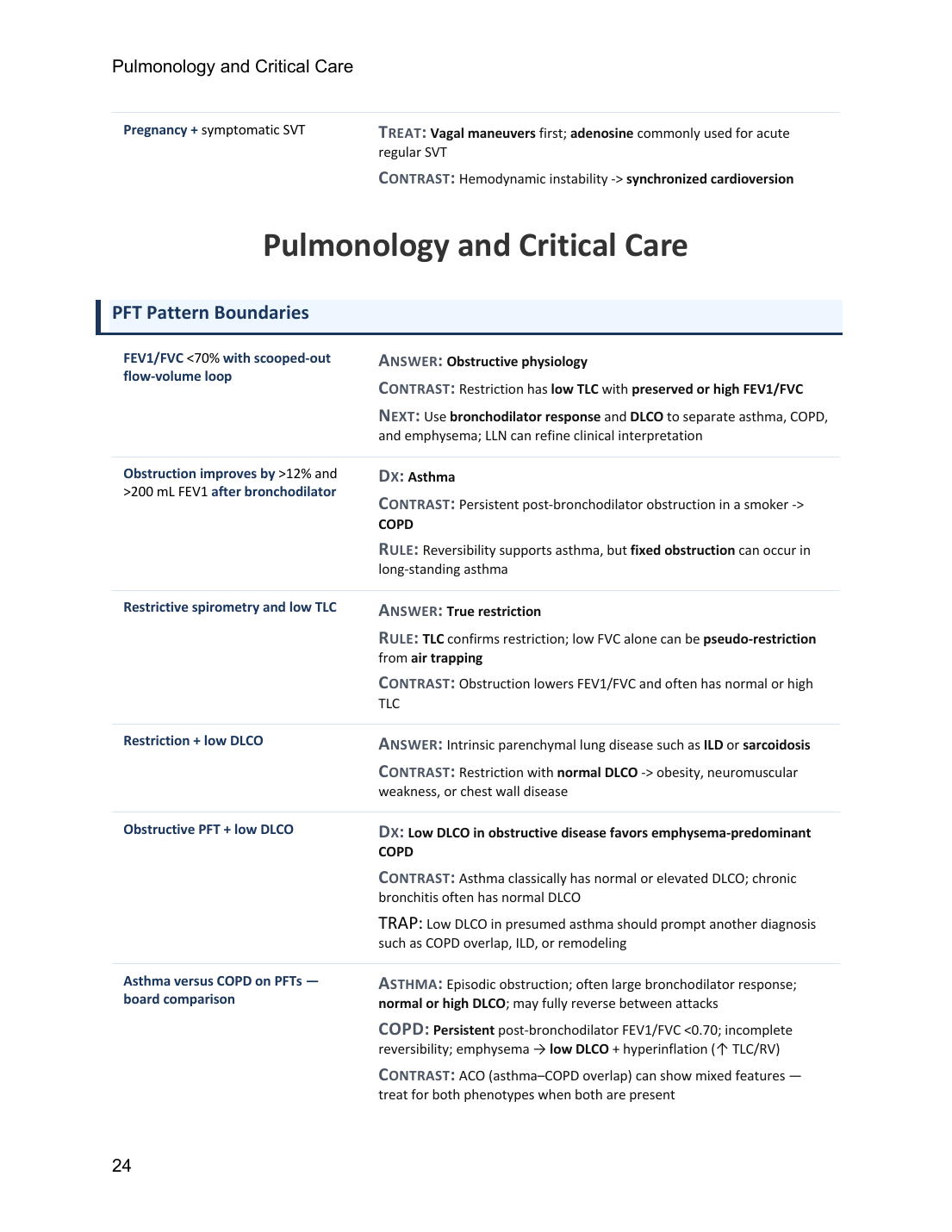
This free excerpt from For The Boards lets you inspect the layout before buying the printed book. The sample is an excerpt, not the full chapter or a complete board-preparation course.
A pulmonary study session can involve symptoms, physiology, imaging, and management in the same block of questions. Keep your notes clear about which layer you are reviewing. Recognizing a pattern and explaining what that pattern means are different tasks.
A four-line pulmonary review note
- Presentation: What brought the patient into the question, and what was the time course?
- Pattern: What did you need to interpret—such as a test result, image, or examination finding?
- Contrast: Which alternative did you confuse with the intended answer?
- Next question: What would you ask yourself later to check that you understand the distinction?
Practice explaining the pattern in words
When reviewing pulmonary function questions, try describing the relevant result in a sentence before attaching a diagnosis to it. Then check your interpretation against your source. If two answer choices still seem interchangeable, identify which missing distinction you need to look up.
The goal is not to collect a long list of labels. It is to understand which information supports your interpretation and which information would change it. Keep actual diagnostic thresholds and treatment recommendations tied to current clinical references.
Try the format with one question you missed
Open the sample and look for a related topic. Add a short prompt beside it: the clue you overlooked, the alternative you confused it with, or the decision you want to practice. Leave the full explanation in your source and add a reference so you can return to it.
The book uses compact labels such as Dx, Next, Contrast, and Trap. Use the sample to decide whether that layout helps you organize your own notes. For a step-by-step method, see how to review missed questions.
These study prompts describe a review method, not clinical care instructions. Check diagnostic and treatment details against current references and your educational supervision.
Explore the other samples: Cardiology · Nephrology. The printed book is $60 with U.S. shipping included.